
Deployment Path
The program uses a phased approach that allows TTX to evaluate operational value before expanding deployment. Each phase builds on the previous one.

Phase 1 Operational Demonstration
A 90-day POC demonstrating drone capture workflows and automated analytics for railcar inspection and yard intelligence.
Outcome: Validated workflows for collecting inspection and yard operational data.
Phase 2 Facility Deployment
The system transitions into routine operational use at a facility. Phase 2 includes two components.
Operational service
Ongoing operation of the deployed drone capture and analytics system including:
Scheduled drone capture operations
Regular capture runs according to operational schedules.
Dock monitoring and flight oversight
Monitoring of autonomous dock operations and flight execution.
Automated data processing
Computer vision and analytics processing of captured imagery.
Operational dashboards
Operator-facing dashboards for inspection review and yard visibility.
Capability development
Expansion of system capabilities including:
- Additional inspection models
- Expanded yard analytics
- System integration
- Operational reporting
Phase 2 Outcome: An operational capability supporting inspection efficiency, yard visibility, and Autonomous Yard Intelligence at the facility level.
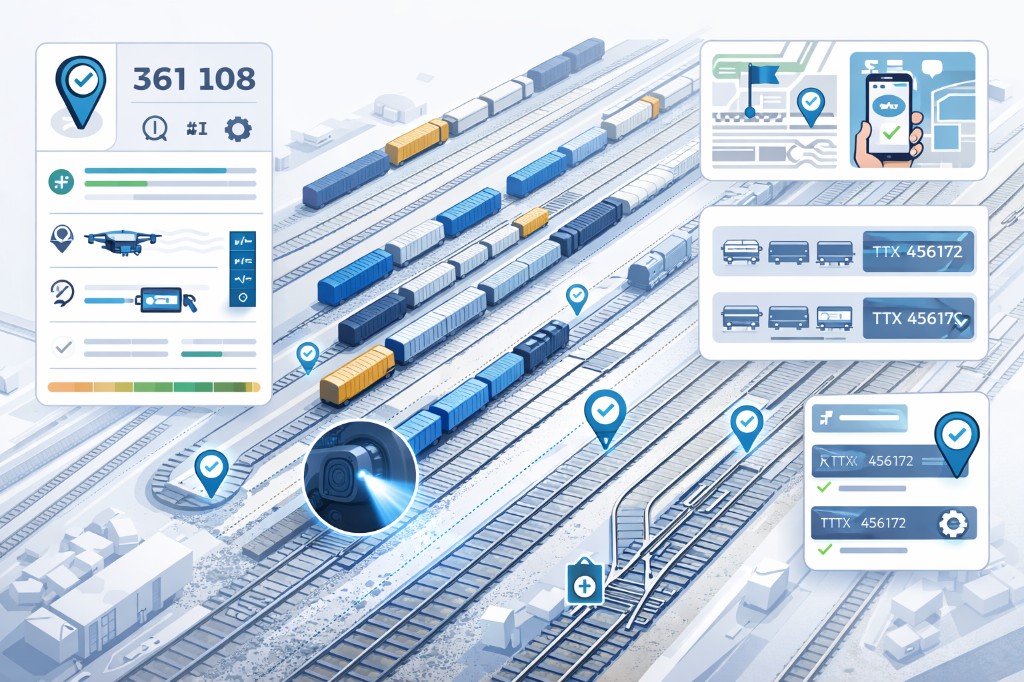
Phase 3 Network Expansion
The system can expand beyond a single yard.
Key activities
- Deployment at additional yards
- Standardized capture procedures
- Cross-facility data collection
- Network analytics
Examples of analytics
- Aggregated inspection findings
- Yard activity insights
- Fleet condition trends
Phase 3 Outcome: A scalable operational capability supporting multiple yards and the continued development of Autonomous Yard Intelligence across the network.

Strategic Value Path
Stage 1 — Inspection Automation
(Phase 1 + Phase 2)
Initial deployments focus on improving the efficiency and consistency of railcar inspections through drone capture and automated analytics.
Potential benefits:
- Improved inspection coverage
- More consistent inspection documentation
- Reduced manual inspection time
- Digital inspection records
Outcome: An Autonomous Yard Intelligence capability that continuously collects railcar condition, location, and operational data.
Stage 2 — Yard Operational Visibility
(Phase 2 expansion)
Once drone data is regularly captured, the same system can provide improved visibility into railcar positions and yard activity.
Potential capabilities:
- Drone-based yard scans
- Automated railcar identification
- Track-level car location mapping
- Yard activity visualization
Outcome: A continuously updated digital view of yard activity.
Stage 3 — Network Asset Intelligence
(Phase 3)
As inspection data accumulates across facilities, analytics can begin to provide insight into railcar condition trends across the fleet.
Potential capabilities:
- Fleet-level defect analytics
- Trend detection across inspections
- Maintenance planning insights
- Early indicators of emerging issues
Outcome: A data-driven view of railcar condition across the network.
Long-Term Vision
Over time, drone capture and analytics can support:
- Inspection automation
- Yard situational awareness
- Fleet health monitoring
The system assists inspectors and yard operations rather than replacing them. Each phase builds on the previous one, allowing TTX to evaluate operational value before expanding deployment.